Climate News

Super El Niño Forming in Pacific, Strongest Since 1877

NOAA forecasts a 62% chance of El Niño developing by summer with central Pacific temperatures projected to hit 3°C above average, raising odds of the most intense event since the 1877-78 catastrophe.

Comments

A powerful El Niño system is building across the equatorial Pacific with models now indicating it could surpass every recorded event since 1877.
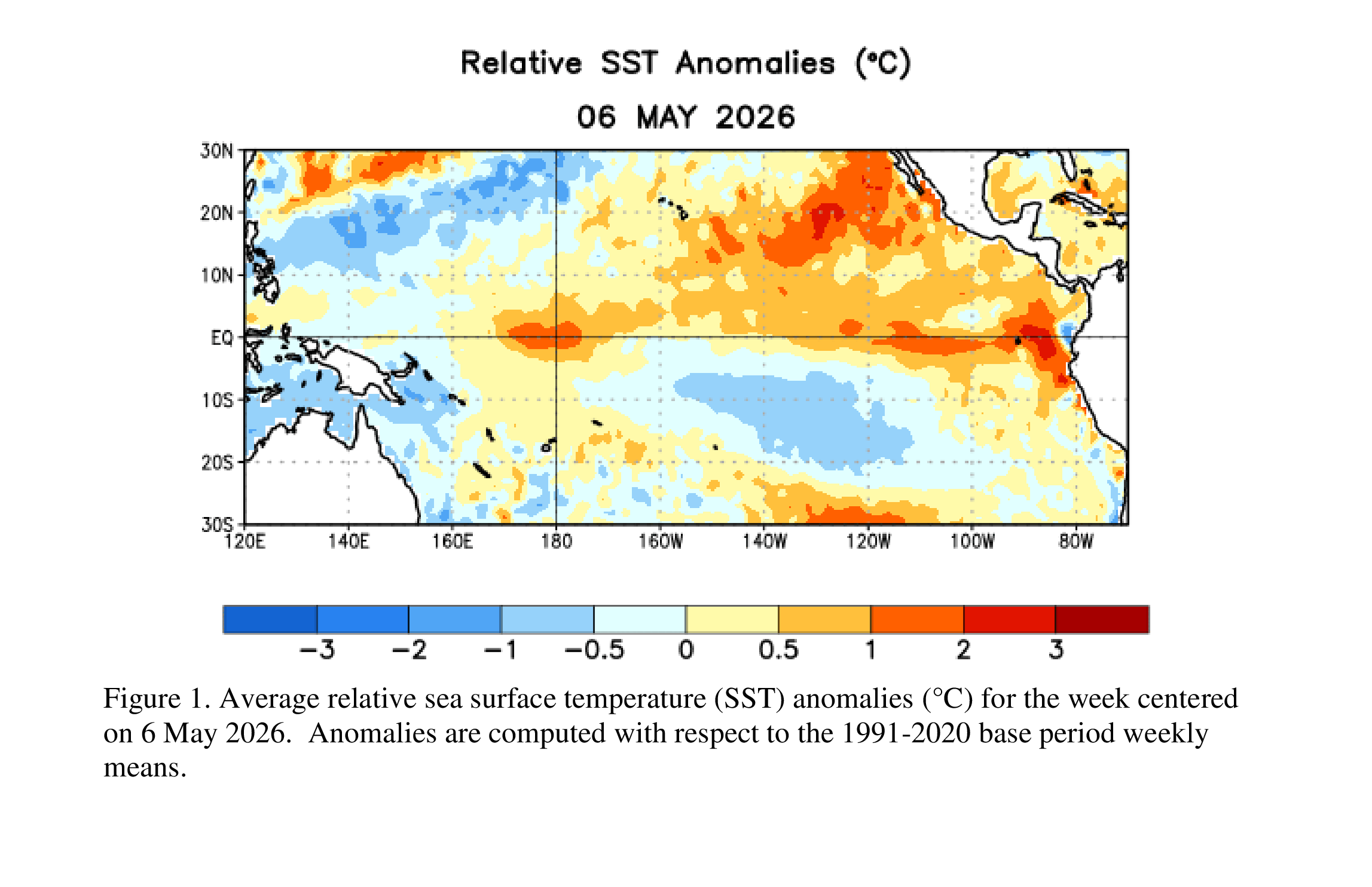
Sea surface temperatures are climbing rapidly toward record levels.

The National Oceanic and Atmospheric Administration's Climate Prediction Center places a 62 percent chance on El Niño emerging between June and August 2026. Persistence through the upcoming winter stands at 96 percent according to the same agency.

Central Pacific sea surface temperatures are forecast to reach 3°C above the long-term average by November. That threshold would place the event among the strongest on record and carries a 37 percent probability of qualifying as a super El Niño between November 2026 and January 2027.

University at Albany professor Paul Roundy stated that confidence is clearly shifting higher on potentially the biggest El Niño event since the 1870s.

Grahame Madge, senior press officer at the UK Met Office, noted that while the term super El Niño is not officially used, the data point to a significant event likely to be the strongest this century and comparable to the notable 1998 occurrence.

Washington Post reporting highlights parallels to the 1877-78 El Niño that triggered famine across multiple continents and killed more than 50 million people. Current ocean temperatures already sit near historic highs, amplifying concerns.

Live Science coverage from mid-May emphasized a 25 percent baseline chance of a very strong event before recent model runs lifted the odds further. Users on X have flooded feeds with maps and personal preparations for prolonged drought in some regions and historic rainfall in others.

The Weather Channel reported on May 7 that global impacts could include altered jet streams producing extreme winters across North America and intensified monsoon failures in Asia. Central Coast California is expected to face repeated atmospheric river events if the pattern locks in.

Forecasters continue to monitor daily buoy data from the equatorial Pacific where warm water anomalies are expanding westward at an accelerating rate. No comparable setup has appeared in the modern observational record.

About the author

Sophia Bennett
Sophia Bennett

Sophia Bennett focuses on international affairs and economic policy, delivering detailed examinations of global developments and their local consequences. She explores the intersections of technology and security through careful research and balanced perspectives. Her approach emphasizes clarity in complex topics and attention to underrepresented viewpoints.

You might also be interested

Changbin and I.N Secure Spotify Verification Badge

Changbin and I.N Secure Spotify Verification Badge

Mamdani Shifts Focus to Skeptical Black New Yorkers

Mamdani Shifts Focus to Skeptical Black New Yorkers

Hantavirus Surge in Argentina Signals Climate Health Crisis

Hantavirus Surge in Argentina Signals Climate Health Crisis

Artificial Intelligence and the Future of Work: Opportunity or Threat?

Artificial Intelligence and the Future of Work: Opportunity or Threat?

India Raises Gold and Silver Import Duties to 15%

India Raises Gold and Silver Import Duties to 15%

Shakira, Madonna and BTS to Headline World Cup Halftime Show

Shakira, Madonna and BTS to Headline World Cup Halftime Show

Rethinking Education: Why Traditional Schooling Falls Short in the 21st Century

Rethinking Education: Why Traditional Schooling Falls Short in the 21st Century

ICE Arrests Honduran at NYC Court Despite Judge Ban

ICE Arrests Honduran at NYC Court Despite Judge Ban

The Benefits of Daily Exercise for Mental Health

The Benefits of Daily Exercise for Mental Health

Urban Planning for a Sustainable Future: Rethinking How We Build Our Cities

Urban Planning for a Sustainable Future: Rethinking How We Build Our Cities

Comments 0

User
Your profileYour profile
AnonymousAnonymous

Pin this comment?

If you already pinned a comment, this will replace it

Delete Comment

Delete the comment forever?

Delete Answer

Delete the answer forever?

Report Comment

Report Reply

Font Size

Adjust the article text size.

Preview text — Aa
Report


5
×
To do this you must log in

When you join the system, you can enjoy the following benefits:

  • Access to content without advertisements.
  • Option to change the interface language to the language you prefer.
  • Possibility to adjust the size of the text.
  • Opportunity to report inappropriate content or inappropriate advertising.
  • Option to save articles and content you like for later reading.
  • An opportunity to express yourself and comment on the articles you will read.
Login to your account