

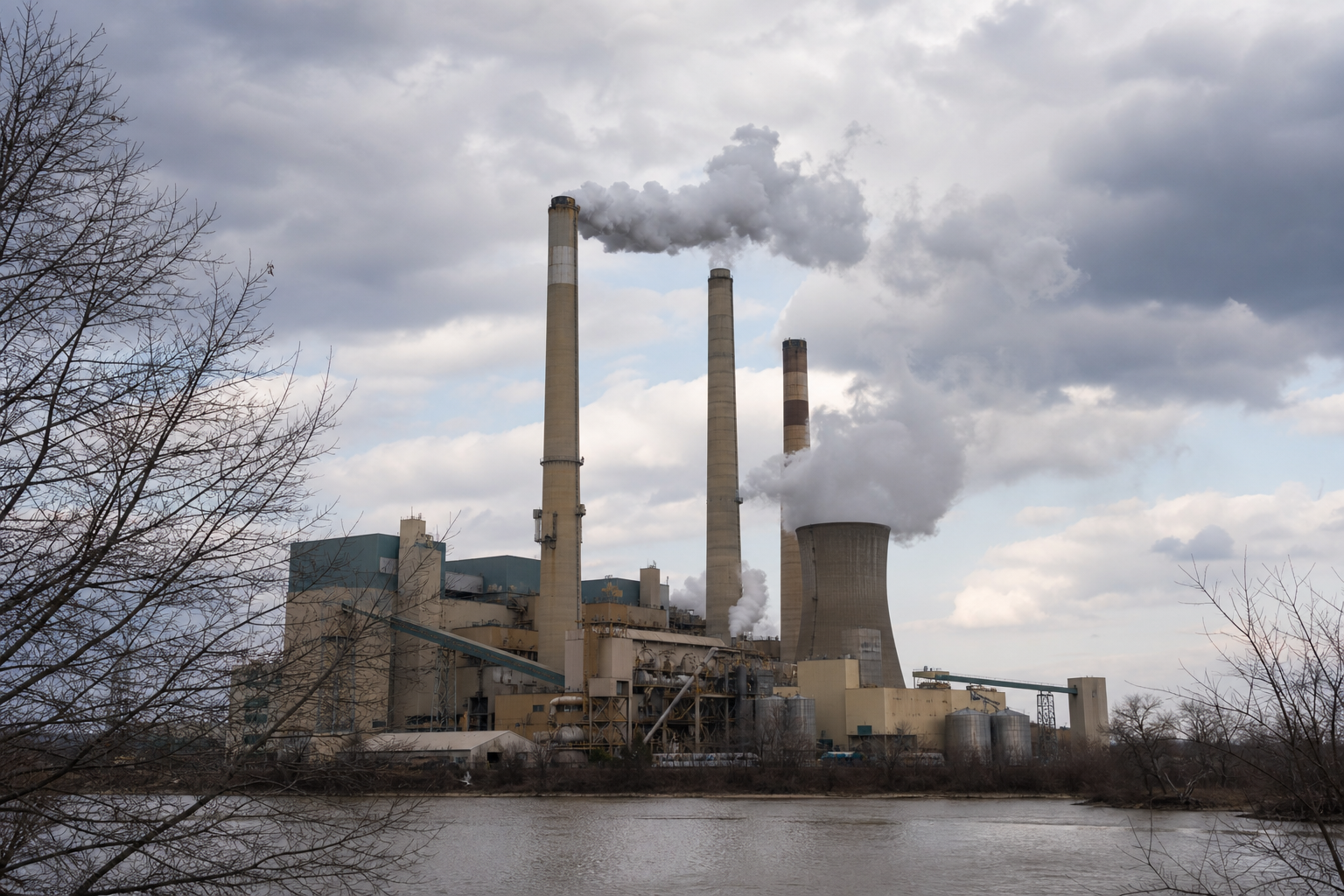
A federal appeals court is weighing Michigan's challenge to Trump administration orders that have prolonged the operation of a coal-fired power plant in the state.
The U.S. Court of Appeals for the D.C. Circuit heard oral arguments May 15, 2026, in a lawsuit filed by Michigan against the Department of Energy. The case contests repeated directives that require the J.H. Campbell coal plant to remain active.
Located in West Olive, Michigan, and run by Consumers Energy, the plant had been slated for retirement in May 2025. Federal officials have issued four successive 90-day extensions citing an energy emergency under Section 202(c) of the Federal Power Act.
Since the original retirement date, Consumers Energy has spent $180 million to keep the facility running. Additional costs passed to ratepayers are projected to total between $43 million and $134 million over a six-month period.
Michigan Attorney General Dana Nessel has led the state's legal effort. In an official press release on the amended complaint, she stated: "We’ve already seen how the Trump administration has unlawfully forced the J.H. Campbell coal plant right here in Michigan to stay open under the guise of its fake energy emergency."
Other attorneys general have echoed similar positions. Minnesota Attorney General Keith Ellison commented that forcing outdated coal plants to operate makes little sense given their expense and environmental impact.
The dispute raises questions about the limits of federal authority in energy matters. Michigan contends the emergency declarations lack basis and override planned transitions to cleaner energy sources.
Reports from MLive and NewsNation detail how the court session examined both the procedural aspects of the orders and their economic consequences for Michigan residents. The state has amended its complaint to address the ongoing renewals.
Legal experts following the case note that Section 202(c) has rarely been invoked in this manner. The Trump administration has defended the measures as necessary to maintain grid reliability.
Consumers Energy continues to comply with the federal directives while the appeal proceeds. Ratepayers in the region have already begun seeing impacts from the extended operations in their bills.
The ongoing litigation highlights tensions between state energy planning and federal intervention in power generation decisions. Michigan officials argue that prolonged reliance on the aging facility delays investments in renewable alternatives and increases long-term expenses for consumers across the region.
Court records indicate multiple filings addressing successive extensions issued by the Department of Energy. Observers expect a ruling that could clarify the scope of emergency powers under the Federal Power Act for similar cases nationwide.