

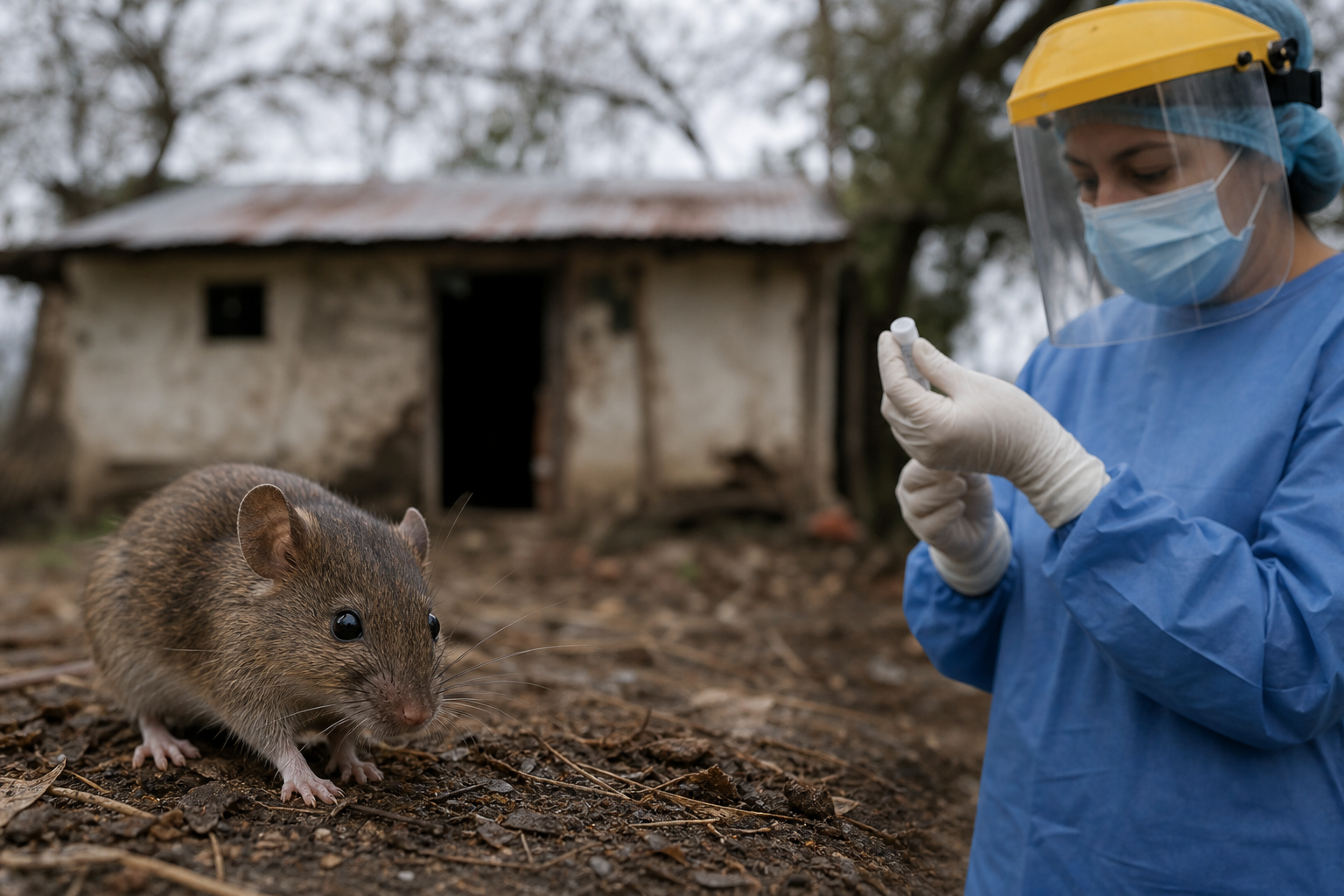
Extreme heat is supercharging a hantavirus outbreak across Argentina, with infections nearly doubling and dozens dead.
Health authorities confirm the highest case count since 2018. The death toll stands at 32 this year.
Warmer conditions and erratic rainfall create more food and shelter for rodents that carry the virus. Transmission to humans rises when people encounter contaminated droppings or urine in homes and workplaces.
A cruise ship cluster that began in Ushuaia illustrates the immediate threat. As of May 8, 2026, eight people developed symptoms, yielding six confirmed cases and three deaths from the Andes virus strain.
Raul González Ittig, a researcher at CONICET, described the mechanism. "When precipitation increases, food availability increases, rodent populations grow, and…the chance of transmission between rodents—and eventually to humans—also increases."
Predictions show 2026 becoming the hottest year on record. El Niño intensifies baseline warming driven by climate change, extending the season when rodents multiply rapidly.
Reporting from CNN journalists ties the surge to both temperature rises and habitat destruction. Cleared forests push rodents into agricultural zones and towns, raising exposure for workers and residents.
Journalists at The Nation have framed the outbreak as a direct climate warning. Similar patterns now threaten other regions where rodent populations respond to shifting weather.
The World Health Organization tracks the multi-country risks after the cruise ship incidents. Officials urge early symptom recognition and rodent-proofing of buildings in affected zones.
Local health teams in Patagonia continue monitoring rodent activity closely while educating communities on prevention steps. Increased surveillance helps detect new clusters early and limits further spread through targeted interventions in rural and urban areas alike.