
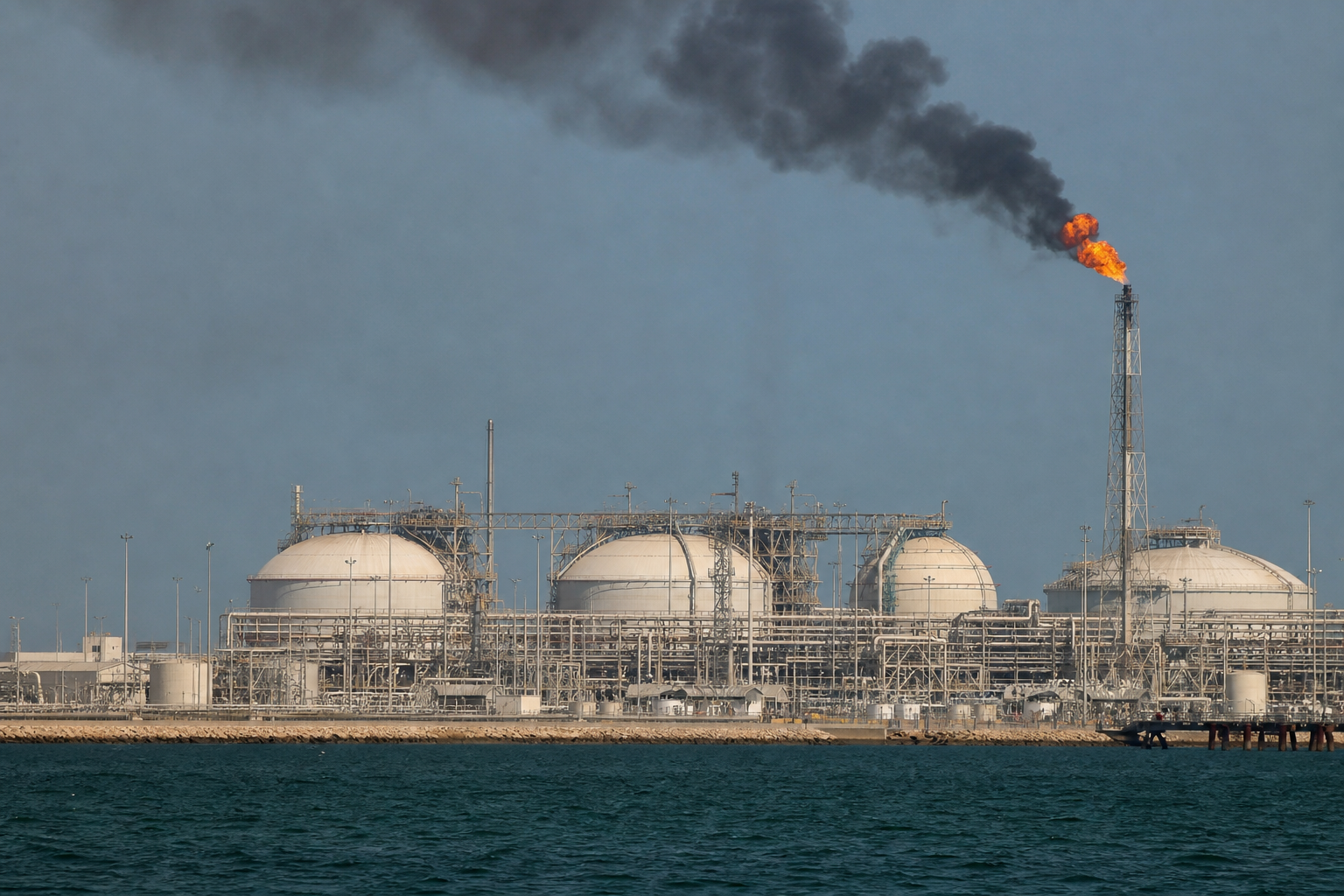
Qatar's massive liquefied natural gas industry has come to a virtual standstill as Iranian military actions close the Strait of Hormuz and damage critical export facilities.
Iranian strikes hit Ras Laffan Industrial City on March 18, 2026. The attacks wiped out 17 percent of Qatar's LNG export capacity. Repairs are projected to take three to five years.
The Strait of Hormuz closure began on March 4. It has halted virtually all Qatari gas exports for more than two months as of May 17, 2026. Tankers carrying the fuel cannot reach buyers in Europe and Asia.
QatarEnergy CEO and Energy Minister Saad al-Kaabi confirmed the scale of the losses. "Iranian attacks have knocked out 17% of Qatar's liquefied natural gas (LNG) export capacity, causing an estimated $20 billion in lost annual revenue and threatening supplies to Europe and Asia," he said. He added that all exporters in the Gulf region will have to call force majeure.
The crisis has already produced an estimated 20 billion dollars in lost annual revenue. Economists now project Qatar's economy will contract by nearly 9 percent this year. Government plans to diversify beyond hydrocarbons into tourism, finance, and technology have stalled as cash flows dry up. Additional sectors including real estate development and international investment inflows have also been severely impacted by the sudden revenue shortfall and ongoing uncertainty in global energy markets.
European buyers who relied on Qatari LNG to replace Russian supplies face renewed shortages. Asian importers in Japan and South Korea have activated emergency storage protocols. Spot prices for liquefied natural gas have jumped more than 40 percent since the blockade began. Industry observers expect these elevated prices to persist for several quarters until alternative supply routes are established.
Inside Qatar, construction projects tied to long-term development goals have slowed. Thousands of contract workers in the energy sector have seen shifts canceled. Local businesses that depended on steady gas revenue report sharp drops in activity. The resulting unemployment spike among expatriate laborers is placing additional strain on housing and public services across the capital region.
Analysts note that Qatar had positioned itself as one of the world's most stable energy suppliers. The current disruption reveals how quickly that position can unravel when key maritime routes and processing hubs are targeted. Long-term contracts with major importers are now under review as both parties seek to mitigate further financial exposure from prolonged instability in the Gulf.